Having a few plants at home can make your balcony, terrace, or garden feel fresh and lively. But if you’ve ever seen a plant suddenly turn yellow, stop growing, or lose its leaves, you’re not alone.
Sometimes, we try to take too much care of our plants without realizing that we may actually be doing something wrong.
The good news is that most common gardening problems are easy to avoid once you know what to look for.
Here are some of the most common home gardening mistakes and simple ways to fix them.
1. Watering Plants Too Much
This is probably one of the most common mistakes, especially when you’re new to gardening.
It’s easy to think, “The plant needs water, so I’ll give it some more.” But too much water can be just as harmful as too little.
When the soil stays wet for a long time, the roots may not get enough air. Poor drainage can make the problem even worse.
How to fix it
Don’t water your plants just because it’s a particular day of the week.
Instead, touch the top layer of soil and see if it feels dry. If it’s still wet, give it some more time.
Also, make sure your pots have proper drainage holes so that extra water can escape.
2. Not Giving Plants Enough Sunlight
Plants need sunlight to grow, but not every plant needs the same amount.
Some vegetables and flowering plants love direct sunlight, while certain indoor plants prefer bright but indirect light.
If your plant looks weak, grows very slowly, or starts producing pale leaves, it may not be getting enough light.
How to fix it
Before placing a plant somewhere, check how much sunlight it actually needs.
If it’s a sun-loving plant, keep it somewhere that receives enough direct sunlight. For indoor plants, a bright spot near a suitable window may work better.
3. Using the Same Soil for Every Plant
Not all plants like the same type of soil.
Some plants need soil that drains quickly, while others prefer a mix that holds a little more moisture. If the soil becomes hard and compacted inside a pot, the roots can also struggle to grow.
How to fix it
Choose your soil based on the type of plant you’re growing.
For container gardening, a good-quality potting mix with proper drainage and organic matter can be a better choice than ordinary garden soil.
Adding suitable compost can also help improve the growing medium.
4. Choosing a Pot That Is Too Small
Have you ever noticed that a plant seems to have stopped growing even though you’re giving it enough water and sunlight?
The pot could be the problem.
As plants grow, their roots need more room. If the roots become crowded, the plant may struggle to grow properly.
How to fix it
Keep an eye on the size of your plant and its roots.
If the plant has clearly outgrown its container, move it into a slightly larger pot. There’s no need to immediately shift a small plant into a huge container.
5. Ignoring Drainage
A beautiful pot isn’t much use if water has nowhere to go.
When excess water stays inside a pot, the soil can remain wet for too long and create problems for the roots.
How to fix it
Always check that your pots have suitable drainage holes.
If you’re gardening on a balcony or terrace, also make sure excess water can drain safely without creating waterlogging or damaging the surrounding area.
6. Using Too Much Fertilizer
More fertilizer doesn’t automatically mean faster growth.
Using too much fertilizer can actually damage the roots and create other problems for your plants.
How to fix it
Read the instructions on the fertilizer you’re using and stick to the recommended quantity.
Also remember that different plants have different nutritional needs. Don’t assume that every plant needs to be fertilized at the same frequency.
7. Ignoring Small Pests
A few tiny insects may not seem like a big deal, but pest problems can spread surprisingly quickly.
Get into the habit of checking the leaves, especially the underside.
Look for things like:
- Small insects
- Holes in leaves
- Sticky patches
- Curling leaves
- Discoloured areas
- Fine webs
How to fix it
Try to spot pest problems early rather than waiting until the entire plant is affected.
First identify the pest and then choose an appropriate plant-care treatment. If you’re using any pesticide or plant-protection product, always follow the product label and recommended dosage.
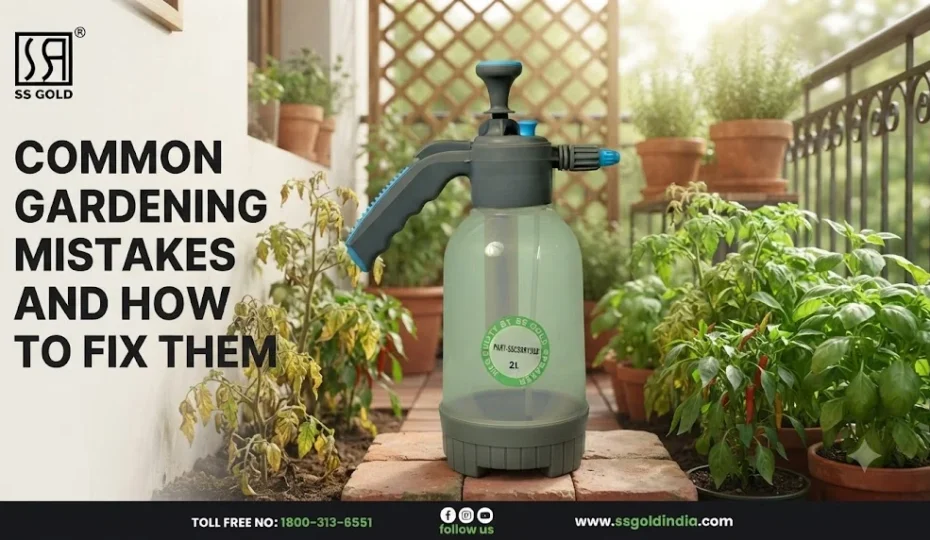
For applying suitable plant-care solutions, a hand sprayer can help distribute the solution evenly over the plant.
8. Leaving Dead Leaves and Damaged Parts on the Plant
Dead or badly damaged leaves don’t need to stay on the plant forever.
Apart from making the plant look untidy, removing clearly dead parts can help you keep an eye on the plant’s overall condition.
How to fix it
Use clean, sharp pruning scissors or shears when removing dead or damaged parts.
But don’t start cutting healthy leaves unnecessarily. Healthy leaves are important for the plant’s growth.
9. Keeping Plants Too Close Together
When you have limited space, it’s tempting to put all your pots next to each other.
But plants also need room to grow.
When they’re packed together, they may compete for sunlight, water and nutrients. There may also be less airflow around the leaves.
How to fix it
Give your plants enough space based on how large they are expected to become.
A little extra space also makes it easier to water, inspect and maintain each plant.
10. Watering Every Plant the Same Way
Your cactus doesn’t need the same watering routine as your tomato plant.
Similarly, an indoor plant may need a completely different routine from a flowering plant growing on a sunny terrace.
How to fix it
Before deciding how often to water a plant, consider:
- What type of plant it is
- How much sunlight it receives
- The size of the pot
- The type of soil
- The current weather
- The season
During hot weather, some pots may dry out quickly. During rainy or humid weather, you may need to water less frequently.
11. Forgetting to Check Your Plants
You don’t have to spend hours every day looking after your plants.
Even a few minutes of checking them regularly can make a big difference.
Look at the leaves, check the soil, notice any insects, and see whether the plant is growing normally.
If you catch a problem early, it’s usually much easier to deal with.
12. Expecting Every Plant to Grow at the Same Speed
This is something many new gardeners learn with experience.
One plant may grow quickly while another takes weeks or months to show noticeable growth. That’s completely normal.
Different plants have different needs and growth patterns.
How to fix it
Before planting, learn a little about the plant you’re growing.
Find out about its:
- Sunlight requirement
- Water requirement
- Soil preference
- Temperature
- Fertilizer needs
- Pot size
- Pruning requirements
Once you understand your plants, taking care of them becomes much easier.
A Simple Routine for Healthier Home Plants
You don’t need a complicated gardening schedule.
Just make these small checks part of your routine:
Check the soil before watering.
Don’t water simply because you watered yesterday.
Look at the leaves.
Yellowing, holes, spots, or insects can be early warning signs.
Check the sunlight.
Make sure each plant is getting the amount of light it needs.
Check the drainage.
Make sure water isn’t sitting inside your pots.
Remove dead or damaged parts when needed.
This keeps your plants cleaner and easier to monitor.
Use fertilizer carefully.
Follow the recommended amount instead of assuming more is better.
Give your plants some space.
Crowded plants can have difficulty getting enough light and airflow.
Final Thoughts
You don’t need to be an expert gardener to grow healthy plants at home.
Most of the time, it’s about paying attention to the small things.
Too much water, poor drainage, insufficient sunlight, unsuitable soil, excessive fertilizer, overcrowding, and pest problems are some of the most common issues home gardeners face.
Instead of trying to do everything at once, start with the basics. Check the soil before watering, give your plants the right amount of sunlight, use suitable soil, and keep an eye out for pests.
And remember—every plant is different. What works perfectly for one plant may not work for another.
With a little patience and regular care, your balcony, terrace, or home garden can stay green, healthy, and enjoyable throughout the year.
Frequently Asked Questions
What is the most common home gardening mistake?
Overwatering is one of the most common mistakes. Many beginners water their plants too frequently without checking whether the soil is already wet.
Why are my plant leaves turning yellow?
Yellow leaves can happen for several reasons, including too much water, too little water, insufficient sunlight, nutrient problems, pests, or natural ageing. Check the plant’s overall condition before deciding what to change.
How often should I water my plants?
There isn’t one watering schedule that works for every plant. Check the soil and consider the plant type, pot size, weather, sunlight, and season.
How can I protect my plants from insects?
Check your plants regularly and try to identify the pest before treating it. For any plant-protection product, follow the manufacturer’s instructions and recommended dosage.
Can too much fertilizer damage plants?
Yes. Excess fertilizer can damage plant roots and affect healthy growth. Always follow the recommended quantity on the product label.
Should every plant be kept in direct sunlight?
No. Different plants have different light requirements. Some need direct sunlight, while others grow better in bright indirect light or partial shade.