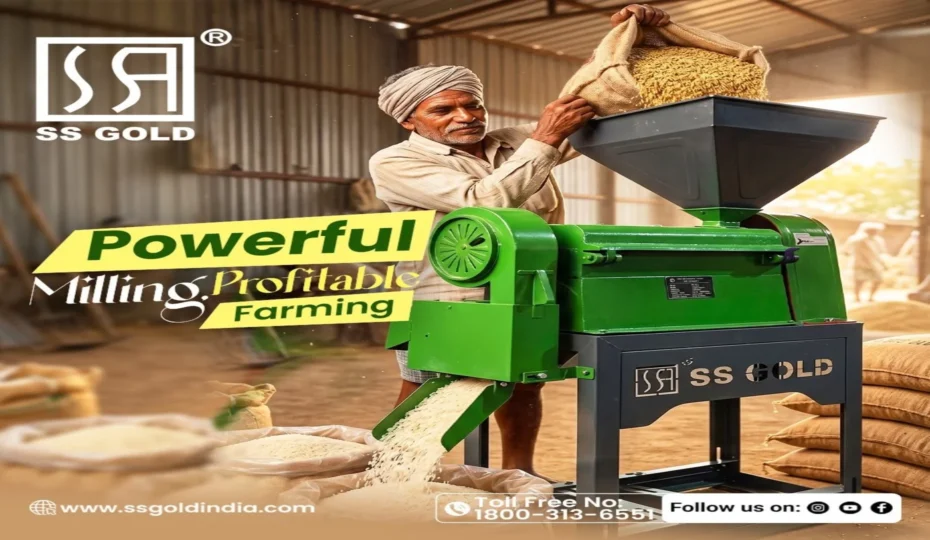
Rice is one of the main staple crops of India. It is a major source of income for millions of farmers. Growing good quality paddy is important but the real value addition comes in the milling process. A reliable rice mill machine for farmers is essential for the efficient transformation of harvested paddy into clean, market-ready rice, minimising waste and increasing profitability.
Whether you are a small-scale farmer, rice trader or an entrepreneur planning to start a milling business, investing in the right rice mill machine can greatly improve productivity and long term returns.
This guide will discuss the advantages of rice mill machines, how they work, and what to consider when purchasing one.
What is a Rice Mill Machine?
A rice mill machine is a type of farm machinery that removes the husk and bran layers from paddy grains to yield clean polished rice for sale or consumption.
Modern rice mills are built to provide consistent output, minimise grain breakage, and maximise recovery rates. Modern machines save time, reduce labour cost and produce better quality rice as compared to traditional manual milling methods.
Why Farmers Should Use Rice Mill Machine
Higher Profitability
The sale of processed rice usually brings in higher income than the sale of unprocessed paddy. Milling their own harvest means that farmers add value to their produce and fetch better prices in the market.
More efficient processing
Manual rice processing is slow and labour intensive. A modern rice mill can process a large quantity of paddy in much less time thus allowing farmers to complete harvesting operations faster.
Improved grain quality
Modern milling systems reduce broken grains and produce cleaner and more uniform rice. Improved grain quality leads to higher customer satisfaction and market demand.
Reduced Labour Costs
Automated milling greatly reduces the need for manual labour, allowing farmers to save on operational costs and improve productivity.
Reduced grain loss
The modern rice mill is designed for minimum losses during processing. More grain recovery means more rice to sell and higher profits.
How Does a Rice Mill Machine Operate?
The milling process typically consists of several steps:
- The hopper is loaded with paddy.
- The machine strips away the outer hull.
- Bran is separated from Rice.
- The outlet releases clean rice.
- The husk and other by-products are kept separately.
This efficient process means faster production with consistent quality.
Key Features to Consider in a Rice Mill Machine
Important factors to consider before investing:
- High efficiency of milling
- Powerful engine performance
- All Steel Construction durabilty
- Requires little maintenance
- Energy-efficient running
- Easy to clean and maintain.
- Solid performance
- High rate of recovery of grain
- Trustworthy after-sales service
- Spare parts availability
When you buy a quality machine you will have less downtime and reliable performance for years.
Who Can Benefit From Rice Mill?
Rice milling machines are suitable for all types of users like
- Farmers, individually
- Farm Producer Organisations (FPOs)
- rice merchants
- Agricultural co-operatives
- Entrepreneurs in rural areas
- Small and medium-sized rice processing businesses
If you are living in an area where there is a good paddy cultivation, then a rice mill will be a great additional source of income.
Tips to Maintain a Rice Mill Machine
Regular maintenance will help your equipment last longer and run better.
Use these best practices:
- Clean the machine after every use.
- Check belts and moving parts regularly.
- Lubricate parts as recommended.
- Tighten up any loose nuts and bolts.
- Do not allow the machine to become wet or damp.
- Replace any worn out parts as soon as possible.
- Adhere to the manufacturer’s maintenance schedule.
Regular servicing reduces repair work and helps to maintain consistent milling performance
Is Investing in a Rice Mill Worth It?
For farmers and people who grow rice a rice mill is more than a machine. It helps them make money in the long run. By processing paddy on their own they can make sure the quality is good save money on processing and make income.
The demand, for quality rice is still going up. If you have a rice mill you can compete with others and earn more money from farming. A rice mill can help you achieve that.
Conclusion
A modern rice mill machine is a tool for farmers to turn the paddy they harvest into good quality rice. This machine helps farmers work faster and saves them money. If you are growing rice for yourself or to sell a good rice mill machine can really help you get work done and make more money.
When you want to buy a rice mill machine you should look at how rice it can process how well it is made how much energy it uses how much work it needs to keep running and what kind of help you can get from the company after you buy it. This way you can pick the rice mill machine that’s best, for your farm and the way you grow rice.
Frequently Asked Questions (FAQs)
1. What is the main purpose of a rice mill machine?
A rice mill removes the husk and bran from harvested paddy to produce clean, market-ready rice.
2. Is a rice mill suitable for small farmers?
Yes. Small and medium-sized rice mills are ideal for farmers looking to process their own harvest and increase profitability.
3. How does a rice mill improve profits?
It allows farmers to sell processed rice instead of raw paddy, helping them earn better market prices while reducing grain losses.
4. How often should a rice mill be serviced?
Routine cleaning after every use and periodic maintenance according to the manufacturer’s recommendations help ensure optimal performance.
5. What factors should I consider before buying a rice mill?
Look for milling efficiency, build quality, motor power, grain recovery rate, energy consumption, maintenance needs, and after-sales support.