The Smart Way to Start Every Crop Season
Farming success starts with one of the vital stages of growing crops—sowing. Proper sowing impacts seed germination, growth of the plant and the harvest as a result. While hand sowing has been used for ages by many farmers, nowadays agriculture requires speed, efficiency, and accuracy.
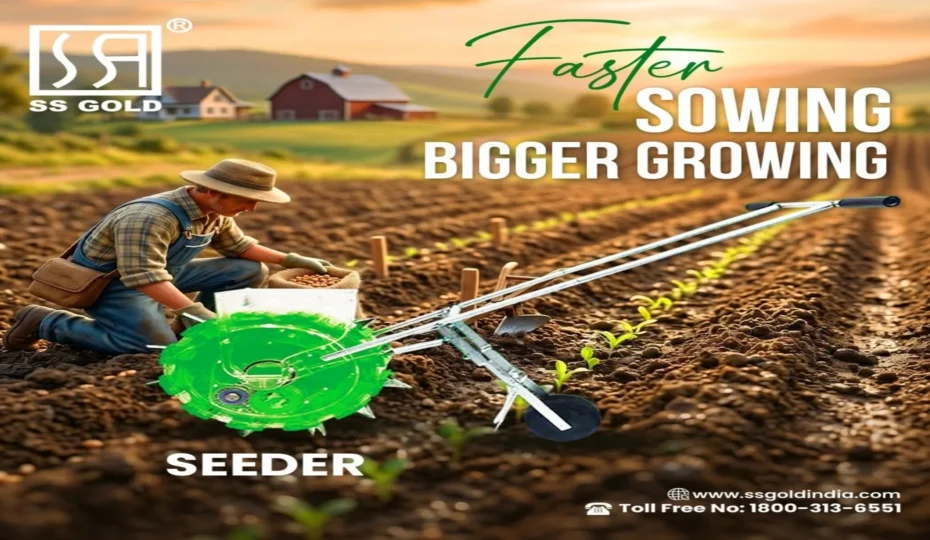
A manual seeder is one of the new farming inventions that can help make the process of seeding easier and more effective as it makes seed placement at uniform depth and spacing. Using a seeder allows saving efforts, time and making better use of seeds.
Here in the blog post, we will tell you about the advantages of using a seeder, its applications and why a seeder became an indispensable tool of farming.
What Is a Seeder?
Seeder is a farming tool that plants the seeds into the ground at correct depth and spacing. Seeders make the planting process much better compared to the old broadcasting method where the distribution was uneven.
Manual seeders are very good for small and medium farms, vegetable planting, nurseries, and horticulture, where precise sowing is crucial.
Why Precision Sowing Matters
The even sowing process has great influence on crops growth.
Sowing properly will allow you to get:
- Good seed germination
- Even growth of crops
- Proper root system development
- Effective nutrients absorption
- Easy management of fields
- Increased productivity of crops
Even small improvement in your sowing process will give you better results.
Benefits of Using a Seeder
Faster Sowing Saves Time
Manual planting can take quite a lot of time especially when it comes to peak agricultural times of the year.
Use of a manual seeder allows the farmers to plant faster thus ensuring timely planting and preventing any time wastage which may affect the growth of the crops.
Uniform Seed Placement
The major benefit of a seeder is the consistent placement of seeds which leads to:
- Reduction of overcrowding
- Healthy growth of plants
- Increased sunlight access
- Improved air circulation
- Improved water absorption
All this will help create optimal growing conditions in the field.
Reduces Seed Wastage
Traditional broadcasting methods often result in uneven seed distribution and unnecessary seed loss.
A seeder helps place seeds more accurately, reducing wastage and improving the overall efficiency of seed usage.
Lower seed wastage also helps reduce input costs.
Minimizes Labor Requirements
A scarcity of labor has been increasingly becoming an issue in farming.
With a manually operated seeder, there is less demand for excessive manual labor, as well as increased productivity.
This increases the efficiency of the task.
Improves Crop Productivity
Proper planting leads to healthier crops that develop evenly.
Some advantages are:
- Higher germination rate
- Stronger roots
- Even crop growth
- Greater yield capacity
Increased productivity ensures profitability of the farm.
Applications of a Seeder
Seeders are suitable for sowing a wide variety of crops, including:
- Vegetables
- Pulses
- Oilseeds
- Maize
- Groundnuts
- Cotton
- Millet
- Horticultural crops
- Nursery plantations
They are ideal for both open-field farming and kitchen gardens.
Why Farmers Are Choosing Modern Seeders
Today’s farmers seek equipment that improves productivity while keeping operating costs under control.
Seeders offer several practical advantages:
- Easy operation
- Lightweight design
- Low maintenance
- Affordable investment
- Better sowing accuracy
- Reduced physical effort
These features make them increasingly popular among progressive farmers.
How to Choose the Right Seeder
Before purchasing a seeder, consider:
- Crop type
- Farm size
- Seed compatibility
- Ease of operation
- Build quality
- Durability
- Maintenance requirements
- Availability of spare parts
Choosing the right equipment ensures better long-term performance and reliability.
Best Practices for Using a Seeder
To achieve the best results:
- Prepare the field properly before sowing.
- Use clean and high-quality seeds.
- Adjust the seeder according to seed size.
- Maintain consistent operating speed.
- Clean the equipment after every use.
- Inspect moving parts regularly.
Proper maintenance helps ensure accurate sowing season after season.
Supporting Sustainable Farming
Seeding helps in achieving efficient and sustainable farming.
Seeders ensure minimal wastage of seeds, making sure resources such as land, water, and other inputs are used more effectively and cost-effectively by farmers.
Sowing seeds through a machine aids in efficient and sustainable farming.
Conclusion
A good harvest starts with efficient planting of seeds. A good seeder assists farmers in sowing seeds fast, saving time and energy and ensuring efficiency in seed planting.
Regardless of what crops you plan to grow such as vegetables, grains, pulses, or horticultural plants, having a good seeder can increase efficiency in farming.
Efficiency in farming is all about achieving maximum results with minimal effort, and a seeder plays a crucial role towards achieving that objective.
Frequently Asked Questions (FAQs)
1. What is a seeder used for?
A seeder is used to place seeds into the soil at the correct depth and spacing, ensuring uniform sowing and better crop establishment.
2. What are the benefits of using a manual seeder?
Manual seeders save time, reduce labor, minimize seed wastage, improve sowing accuracy, and promote healthier crop growth.
3. Which crops can be sown using a seeder?
Seeders are suitable for vegetables, pulses, maize, oilseeds, cotton, millet, groundnuts, and many horticultural crops.
4. How does a seeder improve crop productivity?
Uniform seed placement improves germination, root development, sunlight exposure, and nutrient utilization, resulting in better crop yields.
5. Is a manual seeder suitable for small farms?
Yes. Manual seeders are ideal for small and medium-sized farms because they are easy to operate, affordable, and highly efficient.
6. Does a seeder reduce seed wastage?
Yes. By placing seeds accurately, a seeder minimizes unnecessary seed loss and improves overall seed efficiency.
7. How should I maintain a seeder?
Clean it after each use, inspect moving parts regularly, lubricate components when required, and store it in a dry place.
8. Why is precision sowing important?
Precision sowing ensures consistent plant spacing, improves crop growth, reduces competition between plants, and increases overall farm productivity.