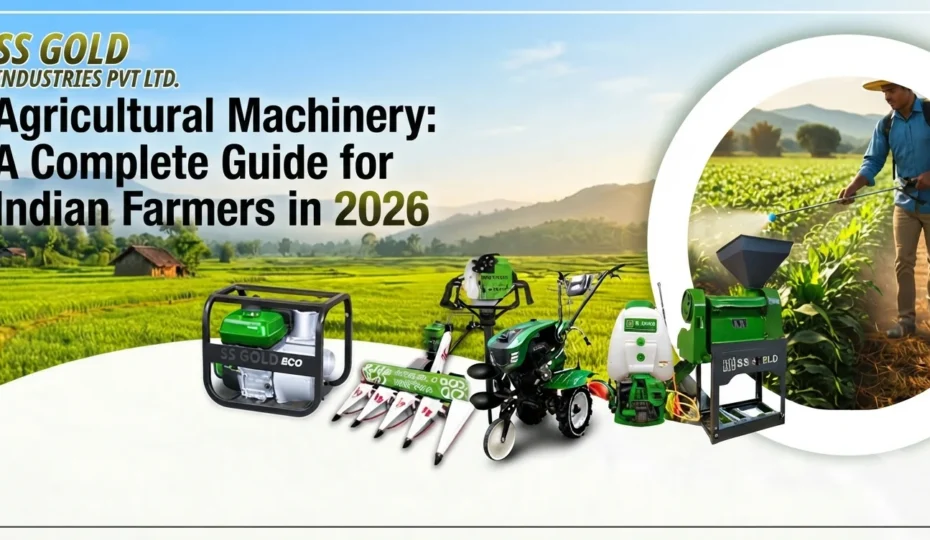
Farming has changed a lot over the years. Earlier, many farming activities depended mainly on manual labour and traditional tools. Today, farmers have access to different types of agricultural machinery that can make daily farm work faster, easier and more manageable.
From preparing the soil and sowing seeds to spraying, weeding and harvesting, the right machine can save valuable time and reduce physical effort.
For farmers dealing with labour shortages or larger farming operations, choosing suitable machinery can make a real difference.
What Is Agricultural Machinery?
Agricultural machinery means the different machines and equipment used to carry out farming activities.
Some commonly used agricultural machines and implements include:
- Tractors and power tillers
- Rotavators
- Cultivators
- Seed drills and planters
- Sprayers
- Weeders
- Reapers and harvesters
- Threshers
- Agricultural trailers
- Post-harvest equipment
Not every farmer needs the same machine. The right choice depends on the type of crop, size of the farm, soil condition and the particular farming work you need to do.
Why Do Farmers Need Agricultural Machinery?
One of the biggest challenges faced by farmers today is completing farm work on time. Sowing or harvesting at the wrong time can affect the overall crop cycle.
This is where agricultural machinery can help.
Saves Time
A machine can complete certain farm operations much faster than manual work. This can be particularly helpful during busy sowing and harvesting seasons.
Reduces Physical Work
Farming involves a lot of physically demanding activities. Machinery can reduce the amount of manual work required and make difficult jobs easier.
Helps Manage Labour Shortages
Finding enough agricultural labour during peak seasons can be difficult. Machinery can help farmers complete important jobs even when labour availability is limited.
Improves Work Efficiency
Machines can perform repetitive activities more consistently. For example, suitable sowing equipment can help maintain better seed spacing and depth.
Can Reduce Overall Operating Costs
Although purchasing machinery requires an initial investment, the right machine can help reduce repeated labour costs and save time over the long term.
Different Types of Agricultural Machinery
There are different machines for different stages of farming. Let’s take a look at some of the most common ones.
1. Soil Preparation Machinery
Good soil preparation is an important first step before planting.
Ploughs, cultivators, rotavators and levellers are commonly used for preparing agricultural land. Depending on the soil and crop, farmers can choose the equipment that best suits their field conditions.
2. Sowing and Planting Machinery
After the soil is ready, the next step is sowing or planting.
Seed drills, planters and transplanters can help farmers place seeds or seedlings more efficiently. These machines can also help maintain proper spacing and reduce wastage of seeds.
3. Weeding Machines
Weeds compete with crops for nutrients, water and sunlight.
Mechanical weeders can help farmers remove weeds while reducing the amount of manual labour required. The type of weeder needed will depend on the crop and row spacing.
4. Agricultural Sprayers
Sprayers are used to apply pesticides, insecticides, fertilizers and other agricultural solutions.
Choosing the right sprayer can help farmers cover the field more efficiently and ensure better application.
5. Harvesting Machinery
Harvesting is one of the most important stages of farming, and delays can lead to crop losses.
Reapers, harvesters and crop-specific harvesting machines can help farmers complete harvesting work faster, especially when a large area needs to be covered within a short period.
6. Threshers and Post-Harvest Equipment
The work does not end after harvesting. Crops may still need threshing, cleaning, drying, grading or processing.
Suitable post-harvest machinery can make these activities easier and reduce manual effort.
How to Choose the Right Agricultural Machinery?
Buying farm machinery is an important decision. Before purchasing, farmers should consider a few basic things.
Consider Your Farm Size
A machine that is perfect for a large farm may not be the right choice for a small farm. Choose equipment according to the area you need to cover.
Consider Your Crop
Different crops require different types of machinery. Make sure the machine is suitable for the crop you grow.
Check Tractor Compatibility
If you are buying a tractor-operated implement, check the required tractor horsepower and whether the implement is compatible with your tractor.
Look at Running Costs
Don’t look only at the purchase price. Also consider fuel consumption, maintenance, spare parts and other running expenses.
Check After-Sales Service
Good after-sales support is important. Before buying machinery, check whether spare parts, servicing and technical support are easily available in your area.
Compare Performance
Compare the machine’s working capacity, durability, operating requirements and expected performance before making your final decision.
What About Agricultural Machinery for Small Farmers?
Many small farmers may not want to invest a large amount of money in purchasing every type of agricultural machine.
In such cases, custom hiring and shared machinery services can be useful options. Farmers can hire machinery when they need it instead of purchasing every machine themselves.
This can make modern farm machinery more accessible while reducing the investment burden.
The Future of Agricultural Machinery in India
Agriculture is becoming more technology-driven, and farm machinery is changing along with it.
Today, farmers are seeing more advanced equipment for precision farming, improved planting, spraying, harvesting and crop management. Technologies such as agricultural drones and sensor-based equipment are also becoming part of modern farming.
The goal is simple: do farm work more efficiently while saving time, labour and resources.
As technology becomes more accessible, agricultural machinery is likely to play an even bigger role in Indian farming.
Final Thoughts
Agricultural machinery is no longer limited to large farms. Today, farmers have many options depending on their crop, land size and budget.
However, buying a machine should not be a rushed decision. Think about what work you need to do, how often you will use the machine, your tractor compatibility, maintenance costs and service availability.
The right agricultural machine can make farm work easier, save valuable time and help farmers manage their operations more efficiently.
Choose the machine according to your farming needs—not simply because it is the latest or most expensive model.
What is agricultural machinery?
Agricultural machinery includes machines and equipment used for farming activities such as soil preparation, sowing, weeding, spraying, harvesting and post-harvest work.
Which agricultural machines are commonly used in India?
Tractors, power tillers, cultivators, rotavators, seed drills, sprayers, weeders, harvesters and threshers are some commonly used agricultural machines and implements.
How does farm machinery help farmers?
It can save time, reduce physical labour and help farmers complete important farming activities more efficiently.
Is agricultural machinery useful for small farmers?
Yes. Small farmers can choose smaller machines suitable for their farms or use custom-hiring and shared machinery services where available.
What should I check before buying agricultural machinery?
Check the machine’s suitability for your crop and land, power requirements, capacity, running costs, maintenance requirements, spare-parts availability and after-sales service.