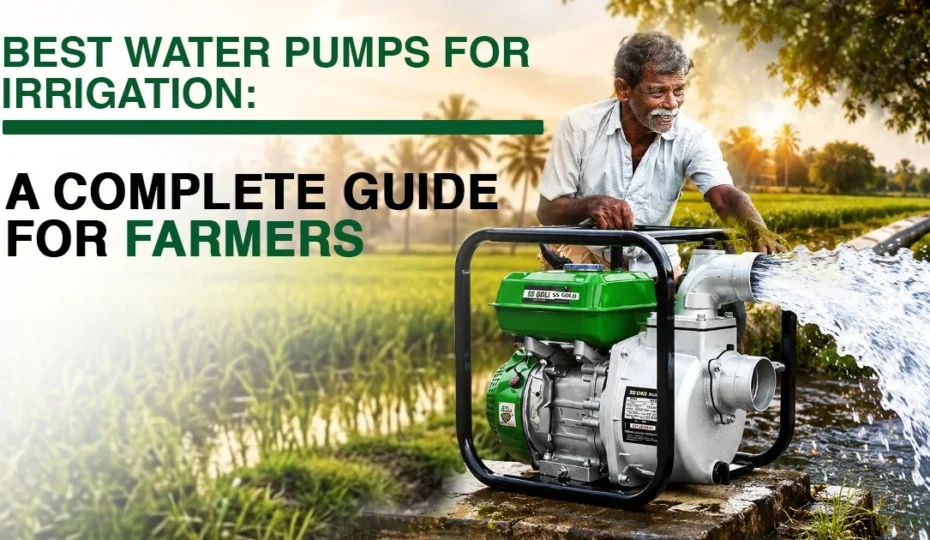
Water is one of the most important resources in agriculture. Whether you grow vegetables, fruits, grains, or cash crops, a reliable irrigation system is essential for healthy plant growth and better yields. At the heart of every irrigation system is a water pump—a machine that ensures water reaches your fields efficiently and consistently.
Choosing the right water pump can significantly improve irrigation efficiency, reduce labor costs, save energy, and increase crop productivity. However, with various types and models available in the market, selecting the best irrigation water pump can be challenging.
In this guide, we’ll explore the best water pumps for irrigation, their types, advantages, and the factors you should consider before making a purchase.
Why Is a Good Water Pump Important for Irrigation?
An irrigation water pump is responsible for moving water from sources such as wells, rivers, ponds, lakes, or storage tanks to agricultural fields. A high-quality pump provides:
- Consistent water supply
- Better crop growth
- Reduced water wastage
- Improved irrigation efficiency
- Lower operating costs
- Increased farming productivity
Investing in the right pump can save both time and money while ensuring your crops receive adequate moisture throughout the growing season.
Types of Water Pumps Used in Irrigation
Understanding different types of irrigation pumps helps farmers choose the most suitable option based on water source, field size, and crop requirements.
Centrifugal Water Pumps
Centrifugal pumps are among the most commonly used irrigation pumps worldwide.
Best For:
- Surface water sources
- Ponds
- Rivers
- Canals
- Storage tanks
Advantages:
- Easy installation
- Affordable maintenance
- High water flow rate
- Suitable for medium and large farms
Limitations:
- Less effective for deep water extraction
These pumps are ideal for farmers who have easily accessible water sources and need reliable irrigation throughout the season.
Submersible Pumps
Submersible pumps operate underwater and are designed for extracting water from deep wells and borewells.
Best For:
- Deep borewells
- Underground water sources
Advantages:
- High efficiency
- Quiet operation
- Long service life
- Reduced energy loss
Limitations:
- Higher initial investment
- Requires professional installation
Submersible pumps are highly recommended for regions where groundwater is the primary irrigation source.
Solar Water Pumps
Solar-powered irrigation pumps have become increasingly popular due to rising fuel and electricity costs.
Best For:
- Remote agricultural areas
- Off-grid farms
- Sustainable farming operations
Advantages:
- Zero fuel cost
- Environment-friendly
- Low maintenance
- Long-term savings
Limitations:
- Higher upfront cost
- Performance depends on sunlight availability
Government subsidies in many regions have made solar pumps more affordable for farmers.
Diesel Water Pumps
Diesel pumps are widely used where electricity is unavailable or unreliable.
Best For:
- Remote farms
- Emergency irrigation
- Large agricultural operations
Advantages:
- High power output
- Portable operation
- Works without electricity
Limitations:
- Fuel expenses
- Higher emissions
- More maintenance
Despite growing interest in renewable energy, diesel pumps remain a practical choice for many farmers.
Electric Water Pumps
Electric irrigation pumps are popular among farmers with access to stable power connections.
Best For:
- Small and medium farms
- Regular irrigation schedules
Advantages:
- Low operating cost
- Easy maintenance
- Reliable performance
- Environmentally cleaner than diesel pumps
Limitations:
- Requires continuous electricity supply
These pumps offer excellent long-term value for agricultural irrigation.
Best Water Pumps for Different Farm Sizes
Small Farms (1–5 Acres)
Recommended Options:
- Electric centrifugal pumps
- Small submersible pumps
- Solar water pumps
Benefits:
- Affordable investment
- Easy operation
- Lower energy consumption
Medium Farms (5–20 Acres)
Recommended Options:
- High-capacity centrifugal pumps
- Deep well submersible pumps
- Hybrid solar irrigation systems
Benefits:
- Improved water coverage
- Better irrigation efficiency
- Suitable for multiple crops
Large Farms (20+ Acres)
Recommended Options:
- Industrial-grade centrifugal pumps
- High-capacity diesel pumps
- Large solar pumping systems
Benefits:
- Maximum water delivery
- Continuous irrigation support
- Suitable for commercial agriculture
Key Factors to Consider Before Buying an Irrigation Water Pump
Water Source
Determine whether water comes from:
- Borewell
- Open well
- River
- Pond
- Canal
- Reservoir
Different water sources require different pump technologies.
Water Requirement
Calculate:
- Crop water demand
- Irrigation frequency
- Farm size
- Peak water usage
A properly sized pump ensures efficient operation without wasting energy.
Pump Capacity
Look for:
- Flow rate (liters per minute)
- Head height (water lifting capacity)
- Pressure requirements
Choosing the wrong capacity can lead to poor irrigation performance.
Energy Efficiency
Energy-efficient pumps can significantly reduce operating costs over time.
Consider:
- Star-rated electric motors
- Solar-powered systems
- High-efficiency impellers
Durability and Build Quality
Agricultural pumps often operate in harsh conditions.
Choose pumps with:
- Corrosion-resistant materials
- Heavy-duty motors
- Strong seals and bearings
- Reliable warranty support
Maintenance Requirements
Select pumps that offer:
- Easy servicing
- Readily available spare parts
- Local service support
This minimizes downtime during critical irrigation periods.

Common Mistakes Farmers Should Avoid
Buying Based Only on Price
A cheaper pump may result in higher maintenance and energy costs.
Ignoring Water Depth
Not all pumps are suitable for deep wells.
Choosing Incorrect Capacity
Oversized and undersized pumps both reduce efficiency.
Neglecting Future Expansion
Consider future irrigation needs when selecting pump capacity.
Skipping Regular Maintenance
Routine inspections improve pump lifespan and performance.
Benefits of Choosing the Right Irrigation Water Pump
A properly selected irrigation pump provides:
✅ Better crop yields
✅ Efficient water management
✅ Lower operational costs
✅ Reduced labor requirements
✅ Faster irrigation cycles
✅ Long-term reliability
✅ Sustainable agricultural growth
Future of Irrigation Pumps
Modern irrigation technology is evolving rapidly. Today’s advanced water pumps feature:
- Smart monitoring systems
- Automatic pressure control
- Remote operation via mobile apps
- Solar-powered automation
- Energy-efficient motor technology
As agriculture becomes more technology-driven, investing in modern irrigation equipment can help farmers stay productive and competitive.
Conclusion
Choosing the best water pump for irrigation is one of the most important decisions for any farmer. The ideal pump depends on your water source, farm size, crop requirements, and budget.
Centrifugal pumps are excellent for surface water applications, submersible pumps work best for deep wells, solar pumps offer sustainable long-term savings, while electric and diesel pumps continue to serve a wide range of agricultural needs.
Before purchasing, carefully evaluate your irrigation requirements and invest in a reliable, efficient, and durable water pump. The right choice will not only improve water management but also contribute to healthier crops, higher yields, and greater farming profitability for years to come.