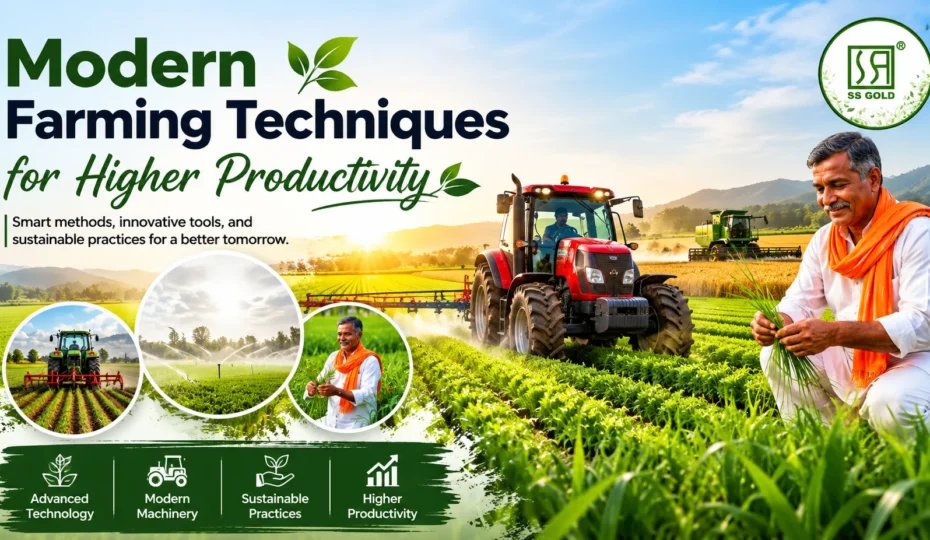
Agriculture has evolved significantly over the past few decades. Traditional farming methods that once relied heavily on manual labor and natural conditions are now being complemented by advanced technologies and scientific practices. As the global population continues to grow, farmers face increasing pressure to produce more food while using limited resources efficiently.
Modern farming techniques help farmers improve crop yields, reduce production costs, conserve resources, and achieve sustainable agricultural growth. Whether you’re a small-scale farmer or managing large agricultural operations, adopting modern farming methods can significantly increase productivity and profitability.
In this article, we’ll explore some of the most effective modern farming techniques that are transforming agriculture today.
Why Modern Farming Is Important
Modern farming focuses on maximizing output while minimizing waste and environmental impact. By utilizing improved equipment, advanced irrigation systems, data-driven decision-making, and sustainable practices, farmers can:
- Increase crop production
- Improve soil health
- Reduce labor requirements
- Save water and energy
- Minimize pest and disease losses
- Enhance farm profitability
- Promote sustainable agriculture
As climate conditions become more unpredictable, modern farming techniques provide farmers with greater control and resilience.
1. Precision Farming
Precision farming is one of the most revolutionary developments in modern agriculture. It uses technology such as GPS, sensors, drones, and data analytics to monitor and manage crops more accurately.
Benefits of Precision Farming:
- Efficient use of fertilizers and pesticides
- Better crop monitoring
- Reduced input costs
- Higher yields
- Improved resource management
Farmers can identify specific areas that need attention rather than treating the entire field uniformly, leading to better results and lower expenses.
2. Drip Irrigation Systems
Water scarcity is becoming a major challenge for agriculture. Drip irrigation provides water directly to plant roots through a network of pipes and emitters.
Advantages:
- Saves up to 50% more water than traditional irrigation
- Reduces weed growth
- Improves nutrient absorption
- Minimizes soil erosion
- Increases crop productivity
This method is especially useful for vegetables, fruits, and cash crops where precise watering is essential.
3. Mechanization of Farming Operations
Modern agricultural machinery has significantly reduced the dependence on manual labor. Equipment such as power weeders, tractors, harvesters, seed drills, and reapers help farmers perform tasks faster and more efficiently.
Benefits:
- Faster field operations
- Reduced labor costs
- Improved work efficiency
- Better crop management
- Timely planting and harvesting
Farm mechanization allows farmers to cover larger areas in less time, resulting in increased overall productivity.
4. Greenhouse Farming
Greenhouse farming enables farmers to grow crops in a controlled environment regardless of external weather conditions.
Key Advantages:
- Year-round cultivation
- Protection from extreme weather
- Reduced pest infestations
- Higher crop quality
- Increased yield per acre
Greenhouse farming is becoming increasingly popular for vegetables, flowers, herbs, and high-value crops.
5. Crop Rotation and Diversification
Growing the same crop repeatedly can deplete soil nutrients and increase pest problems. Crop rotation involves planting different crops in succession to maintain soil fertility.
Benefits:
- Improved soil health
- Reduced pest and disease outbreaks
- Better nutrient utilization
- Enhanced crop yields
- Lower dependency on chemical fertilizers
Diversifying crops also reduces financial risks by providing multiple income sources.
6. Use of High-Quality Seeds
The foundation of successful farming begins with quality seeds. Modern hybrid and improved seed varieties offer better germination rates, disease resistance, and higher yield potential.
Why Quality Seeds Matter:
- Faster growth
- Better resistance to pests and diseases
- Higher productivity
- Improved crop quality
- Greater profitability
Investing in certified seeds often delivers substantial returns during harvest.
7. Integrated Pest Management (IPM)
Integrated Pest Management combines biological, cultural, mechanical, and chemical methods to control pests effectively while minimizing environmental impact.
Benefits:
- Reduced pesticide usage
- Lower production costs
- Improved crop health
- Environmental protection
- Sustainable pest control
IPM encourages farmers to use pesticides only when necessary and in a targeted manner.
8. Soil Testing and Nutrient Management
Healthy soil is essential for healthy crops. Regular soil testing helps farmers understand nutrient deficiencies and apply fertilizers accordingly.
Advantages:
- Balanced fertilizer application
- Improved soil fertility
- Reduced input costs
- Better crop growth
- Increased yields
Scientific nutrient management ensures crops receive exactly what they need for optimal growth.
9. Smart Farming Technologies
The integration of digital technology into agriculture is creating smarter farms. Farmers now use mobile applications, weather forecasting tools, remote monitoring systems, and IoT devices to make informed decisions.
Smart Farming Benefits:
- Real-time field monitoring
- Improved decision-making
- Early problem detection
- Better resource management
- Enhanced productivity
Technology-driven farming is helping farmers adapt to changing agricultural challenges.
10. Sustainable Farming Practices
Sustainability has become a key focus in modern agriculture. Farmers are increasingly adopting eco-friendly practices that preserve natural resources while maintaining productivity.
Examples include:
- Organic farming
- Composting
- Rainwater harvesting
- Cover cropping
- Conservation tillage
These practices improve long-term soil health and support environmentally responsible farming.
Challenges in Adopting Modern Farming Techniques
Despite the benefits, some farmers face challenges when adopting modern methods:
- High initial investment
- Limited technical knowledge
- Lack of access to advanced equipment
- Infrastructure limitations
- Training requirements
However, government schemes, agricultural extension programs, and technological advancements are making modern farming more accessible than ever before.
The Future of Modern Agriculture
The future of farming lies in innovation and sustainability. Technologies such as Artificial Intelligence (AI), robotics, drone-based monitoring, automated irrigation, and precision agriculture will continue to reshape the agricultural landscape.
Farmers who embrace these advancements will be better positioned to increase productivity, reduce costs, and meet growing food demands.
Conclusion
Modern farming techniques are transforming agriculture by making it more efficient, productive, and sustainable. From precision farming and drip irrigation to smart technologies and sustainable practices, these innovations help farmers maximize yields while conserving valuable resources.
As agriculture continues to evolve, adopting modern farming methods is no longer just an option—it’s a necessity for long-term success. By embracing innovation and continuously improving farming practices, farmers can achieve higher productivity, better profitability, and a more sustainable future.
The farms of tomorrow will be powered by knowledge, technology, and smart decision-making. Those who adapt today will reap the rewards for years to come.